

Skip to content
WhatsApp
EN
DNA helices, a molecule and a glass sphere floating against a green background with flashes of light.

Science that transforms what a material can do.

We develop technologies that give materials new functions: removable coatings made from natural polymers from renewable sources, release solutions that preserve adhesion for subsequent finishes, and thermal-control coatings for construction.

Our method

A need.
A material.
A product.

Research begins with a need and the function a material must fulfil. Development and testing then allow that function to become part of a product.

  1. 01 / 03

    Research

    We define the function that is needed and the properties a material would need to fulfil it.

  2. 02 / 03

    Develop and test

    We formulate and evaluate performance under real conditions of use.

  3. 03 / 03

    Turn it into a product

    We turn the development into a product with specifications, instructions for use and defined applications.

Removable by design.

The film is designed to hold together as it peels away from the surface. Its removal depends on the substrate, the applied thickness and the time in use.

How it works

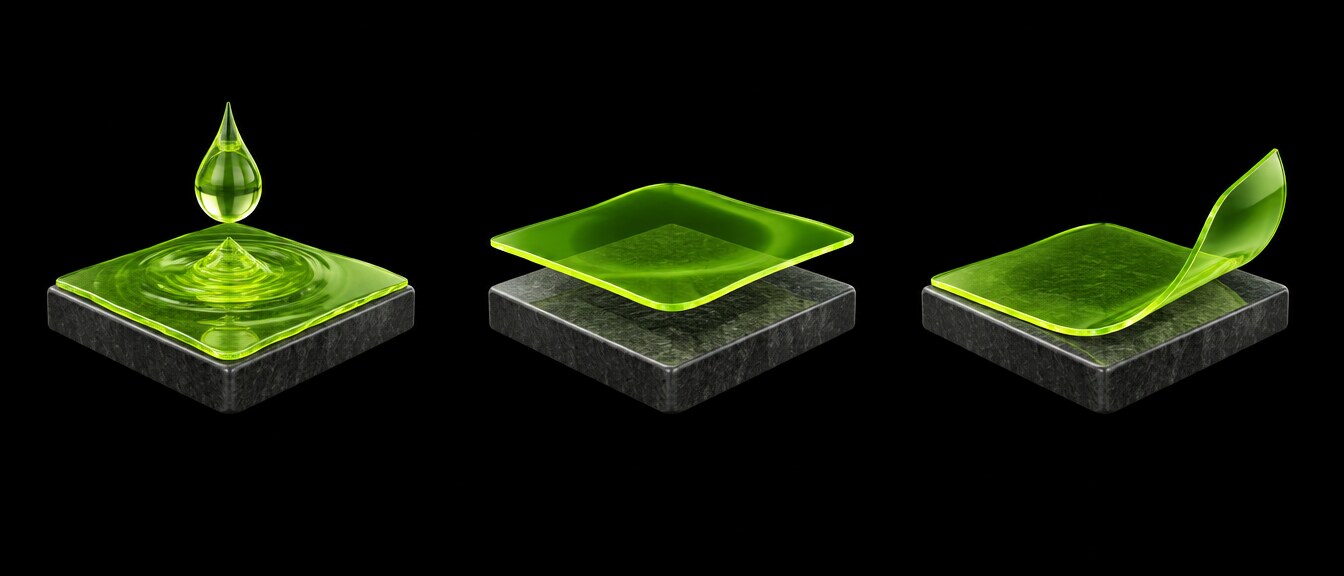
Glasstommer® turns natural polymers into coatings that are applied as liquids and form a removable elastic film as they dry. This means protecting a surface or changing its colour need not be a permanent decision. Each product specifies compatible surfaces and the conditions for application and removal.


film ↔ surface Polymers from renewable sources
Used in
1 · Application2 · Drying3 · Removal
Three grey stone slabs: a drop of lime-green liquid spreads over the first; on the second it forms a flexible film; on the third the film peels away from one corner.
filmsurface
Cross-section. The diagram illustrates liquid application, film formation during drying and removal by peeling. Conditions of use are defined for each product.

Preserves adhesion for subsequent finishes.

Prevents concrete from adhering to the formwork and preserves adhesion for subsequent finishes.

How it works

The quality of a concrete element also depends on the work done before pouring. GlasstMould® facilitates demoulding and is designed to preserve adhesion for subsequent finishes: skim coats, gypsum plasters and paints. It is the technology used in SUPREME and ADVANCE non-gravitational release agents.

concrete ↔ formwork VOC limit (technical data sheet)Non-gravitational in SUPREME and ADVANCE
Used in
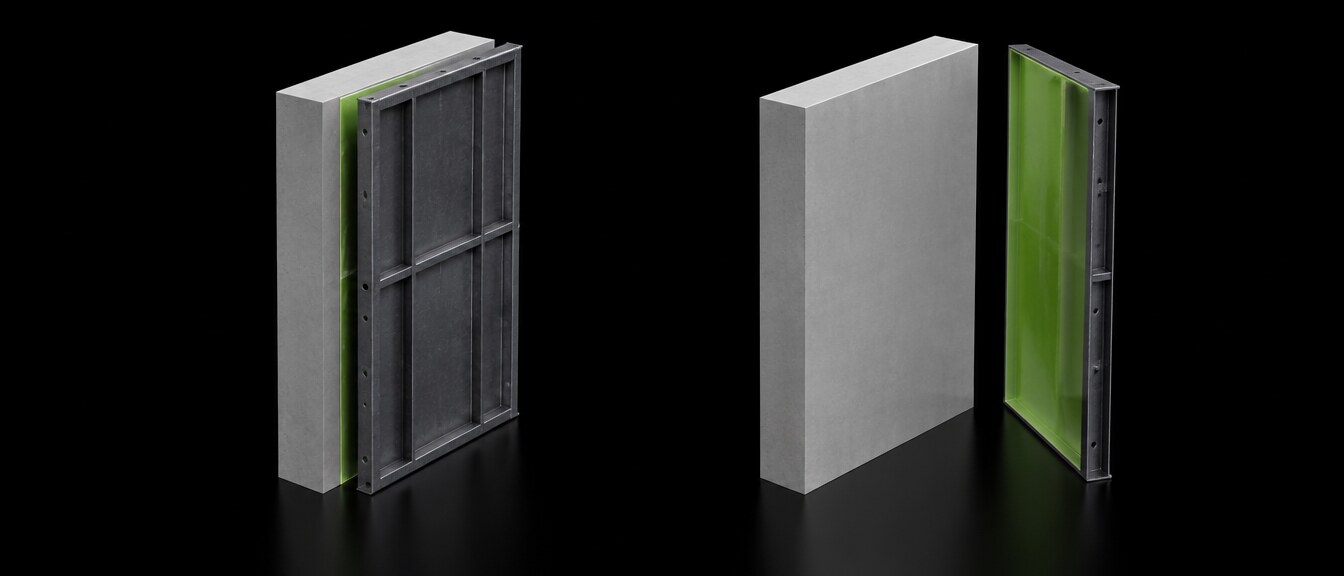
1 · Pouring2 · Demoulding
Two stages of a concrete wall: in the first, metal formwork sits against the concrete with a lime-green layer of release agent between them; in the second, the formwork separates, with the release agent on its inner face, leaving a clean concrete surface.
formworkrelease-agent layerconcrete
Cross-section. The release-agent layer helps the formwork separate from the concrete. After stripping, adhesion is preserved for skim coats, gypsum plasters and paints.

Thermal control in a thin coating.

ThermGlasst® helps reduce heat transfer by conduction, convection and radiation.

How it works

ThermGlasst® develops coatings that help control heat transfer through surfaces and improve thermal comfort in spaces. With UNHEAT, this capability is applied according to the surface, thickness and exposure conditions of each project.

coating ↔ wall Water-based acrylic dispersionThermal controlThin coating
Used in
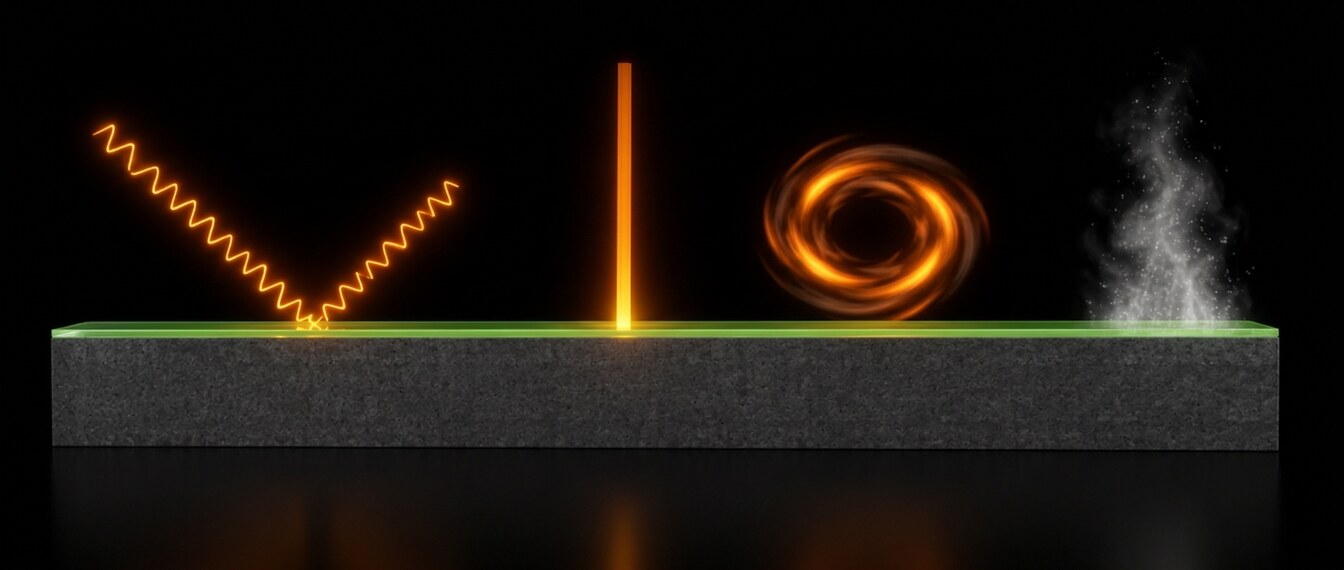
radiationconductionconvectionwater vapour
Front view of a dark-grey wall section with a lime-green coating: a radiation wave reflects off the coating, a bar representing conductive heat stops at its surface, a swirl of hot air turns above it, and water vapour passes out through the coating.
aircoatingwall
Cross-section. ThermGlasst® helps reduce heat transfer through the surface. In UNHEAT, the coating contributes to thermal comfort and allows water vapour to pass through.

Quality shows in the finish.

The technology behind BASIS paints, developed to provide hiding power, adhesion and durability.

How it works

GlasstCoat® covers the development of the paint film that remains on the surface. In BASIS, the finish and performance are defined by the purpose of each product and its application conditions.

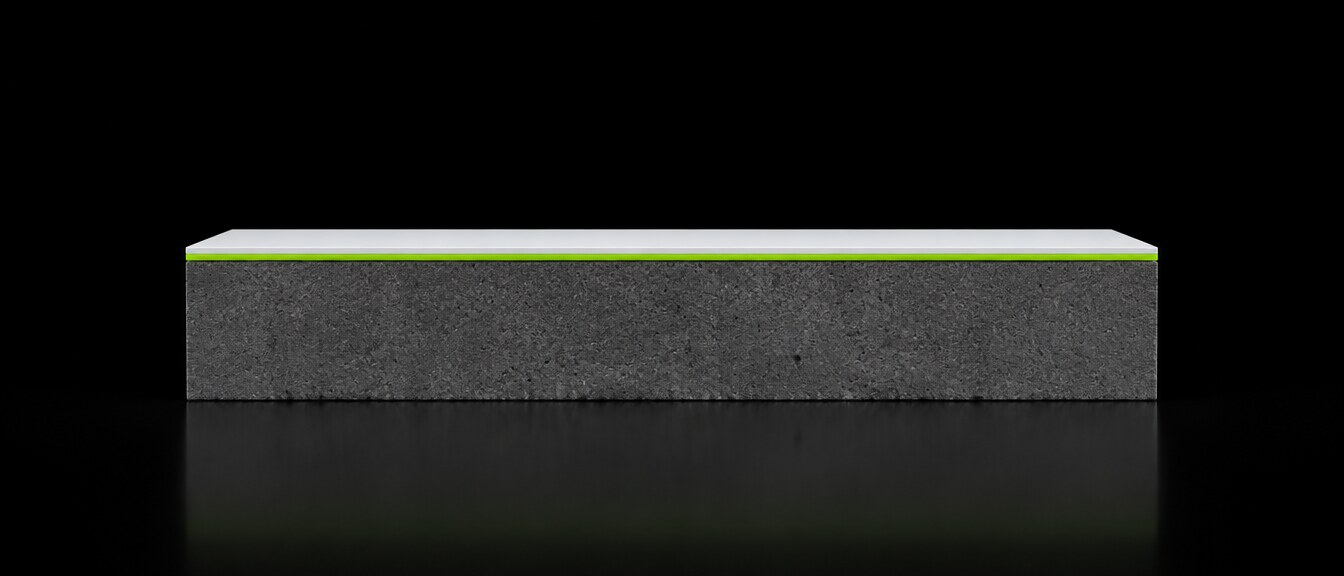
coating ↔ substrate Hiding powerAdhesionDurability
Used in
hiding poweradhesiondurability
Front view of a wall section: a dark-grey concrete block with a prepared surface, topped by a uniform white paint film joined to the surface by a lime-green line.
paint filmprepared surface
Cross-section. Diagram of the coating on the substrate. The finish and performance are specific to each BASIS product.

More control with every stroke.

Reduces paint drips and splatter during application for cleaner, more controlled work.

How it works

GlasstDropZero® acts during the application of BASIS paints that incorporate it. Its function is to reduce drips and splatter; preparation, dilution and tools are selected according to each product's technical data sheet.
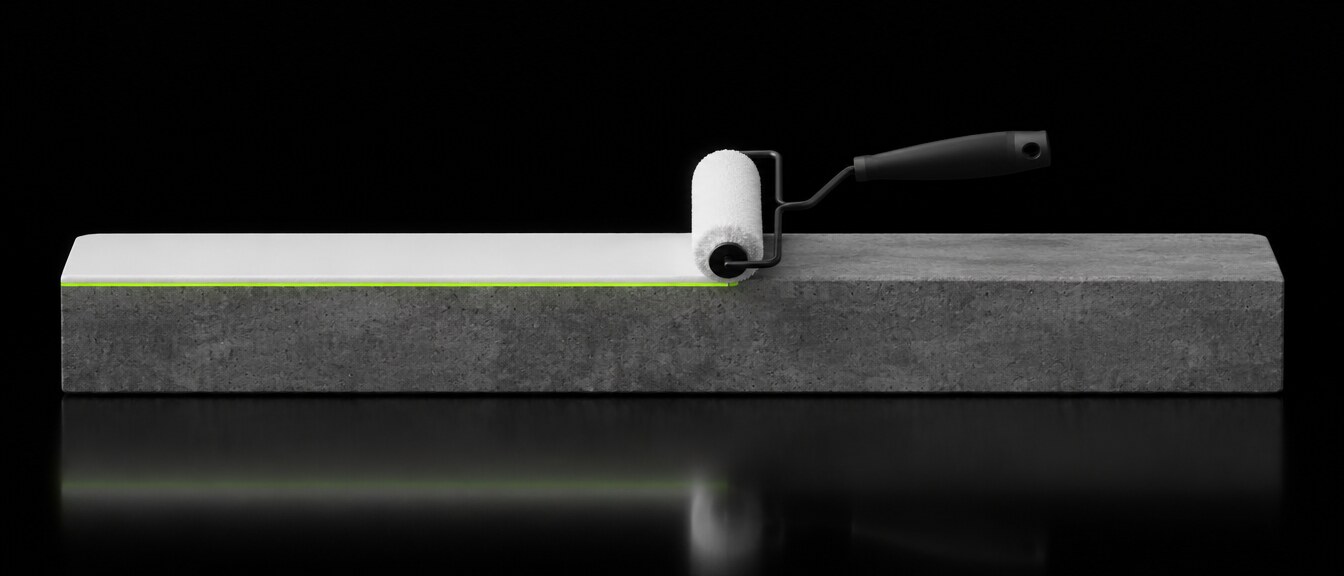
paint ↔ tool Fewer dripsLow splatter
Used in
fewer dripslow splatter
Front view of a white roller moving across a grey concrete block: behind it lies an even coat of white paint with a lime-green line, with no drips or splatter; ahead of it, the surface remains unpainted.
rollerpaintsurface
Application diagram. Reduced drips and splatter depend on the preparation and use specified for each product.

The technologies behind each brand.

The technology explains the shared capability; the specific product determines where it can be used and the performance it offers.

BrandTechnologyProductsLink
Concrete Release Agent GlasstMould® SUPREME · ADVANCE · MAX · 3X1 View
Protector Universal Glasstommer® White · Grey · Translucent View
UNHEAT ThermGlasst® Single product View
BASIS GlasstCoat® · GlasstDropZero® Súper Lavable Pro · Esencial Fondeo Pro · Techos y Drywall Pro View
Unpaint Glasstommer® Removable colour View
Conceptual visualisation of a materials laboratory

The right product for your project.

Tell us which surface you want to work on, how it is used and where your project is located.

Let's talk