


Helps slow heat transfer.
In both directions.
Its cured water-based acrylic dispersion film adds resistance to heat flow: λ = 0.0456 W/(m·K), measured under ASTM C518.
It helps reduce the heat coming in.
When it’s warmer outside than inside, heat tends to flow in.
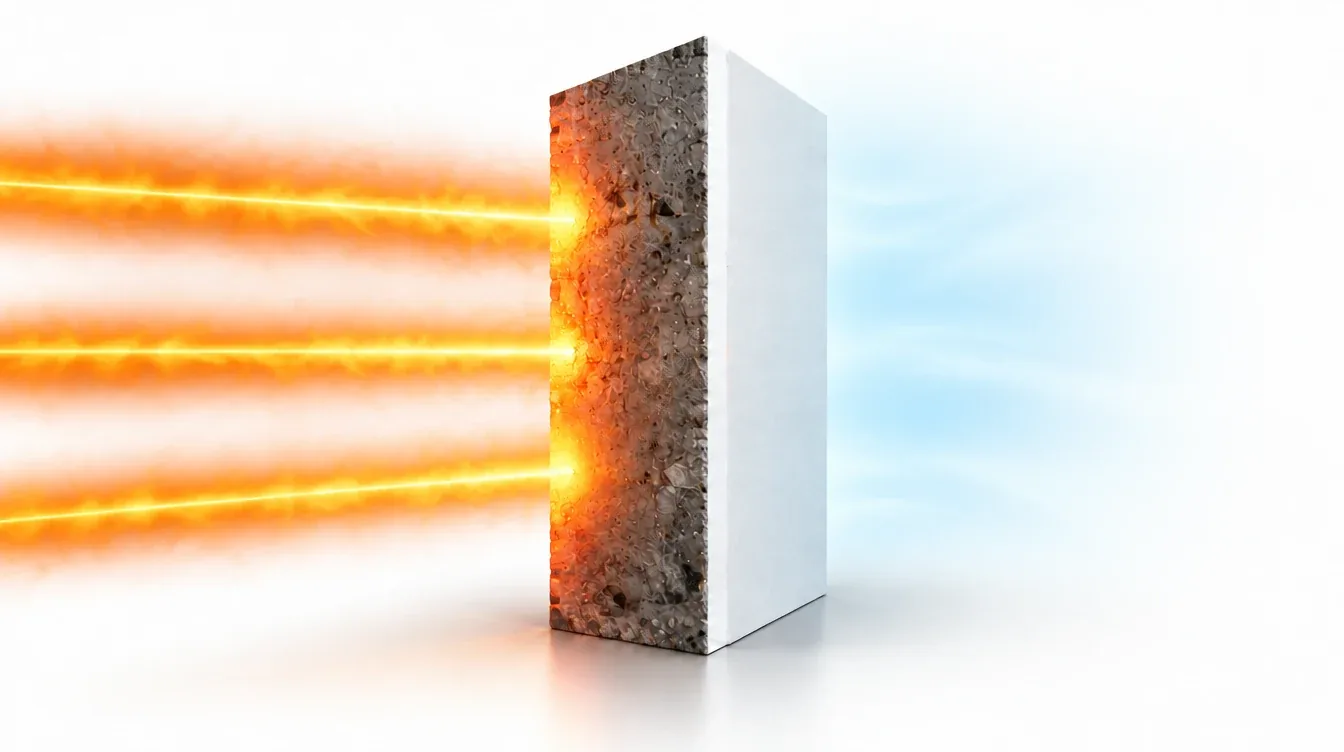
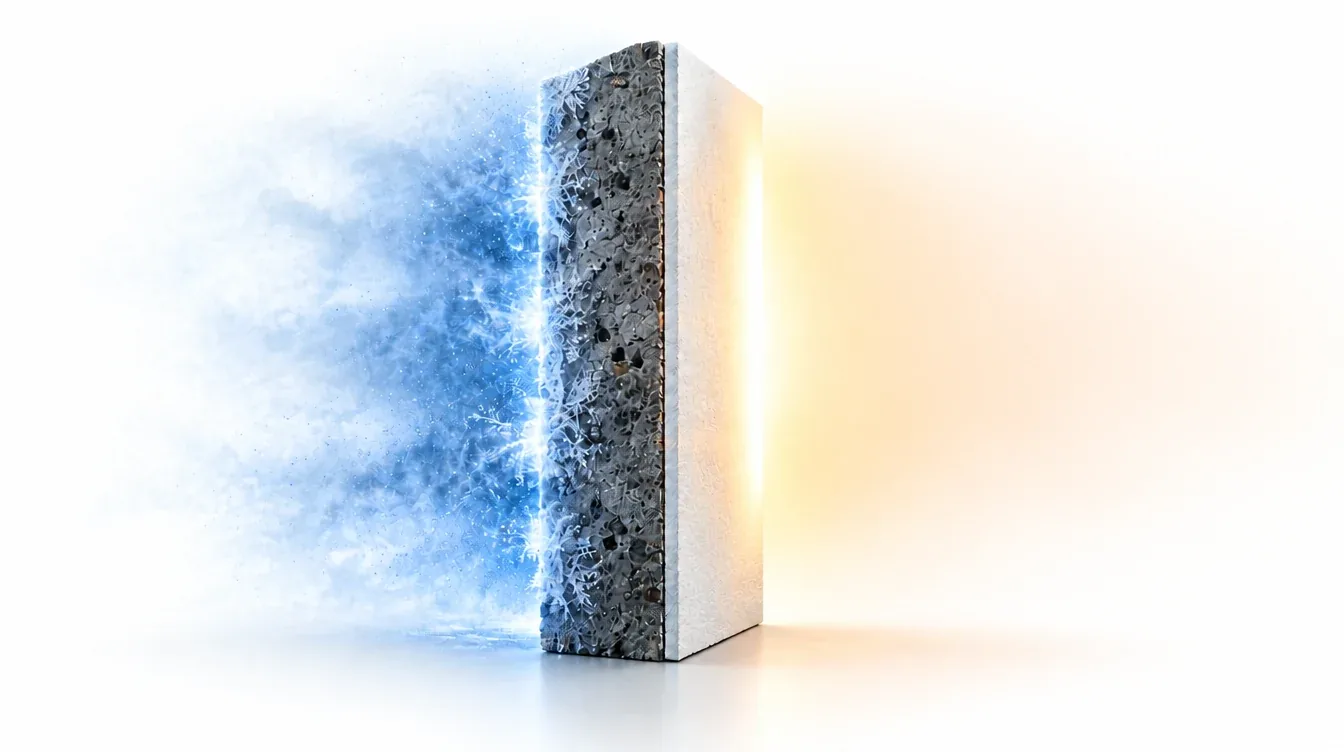
The white layer is UNHEAT®. Applied to the interior wall, it dries to form the insulating coating.
Explore thicknessEvery millimetre
counts.
Adding thickness to a wall takes up floor space. A thin layer helps preserve it.
Greater thickness. Greater thermal resistance.
A dry thickness of 1 mm is the starting point. The required thickness depends on the wall and climate.
Thermal insulation
that’s easy to apply.
UNHEAT® is applied directly onto the prepared wall, like a paint, and leaves a smooth matte finish. It adds thermal insulation in new construction or when renovating an existing space.
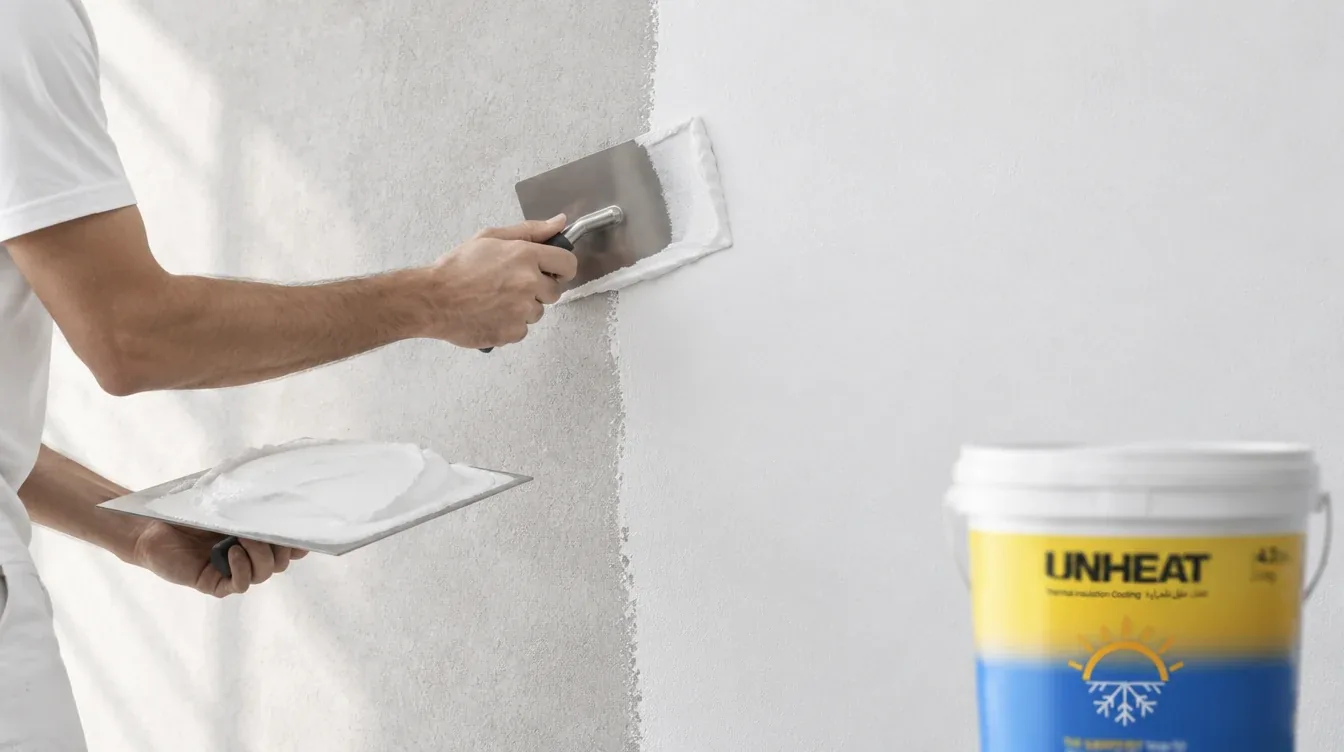
Part of your new build.
Apply the coating to your interior walls at the thickness specified for your project.
On the walls you already have.
Assess the existing surface and prepare it for the coating.
Beyond
insulation.
Insulates. Lets water vapor pass.
Water vapor can pass through UNHEAT®, allowing the wall to “breathe.”
Illustrative section · The white layer is UNHEAT®.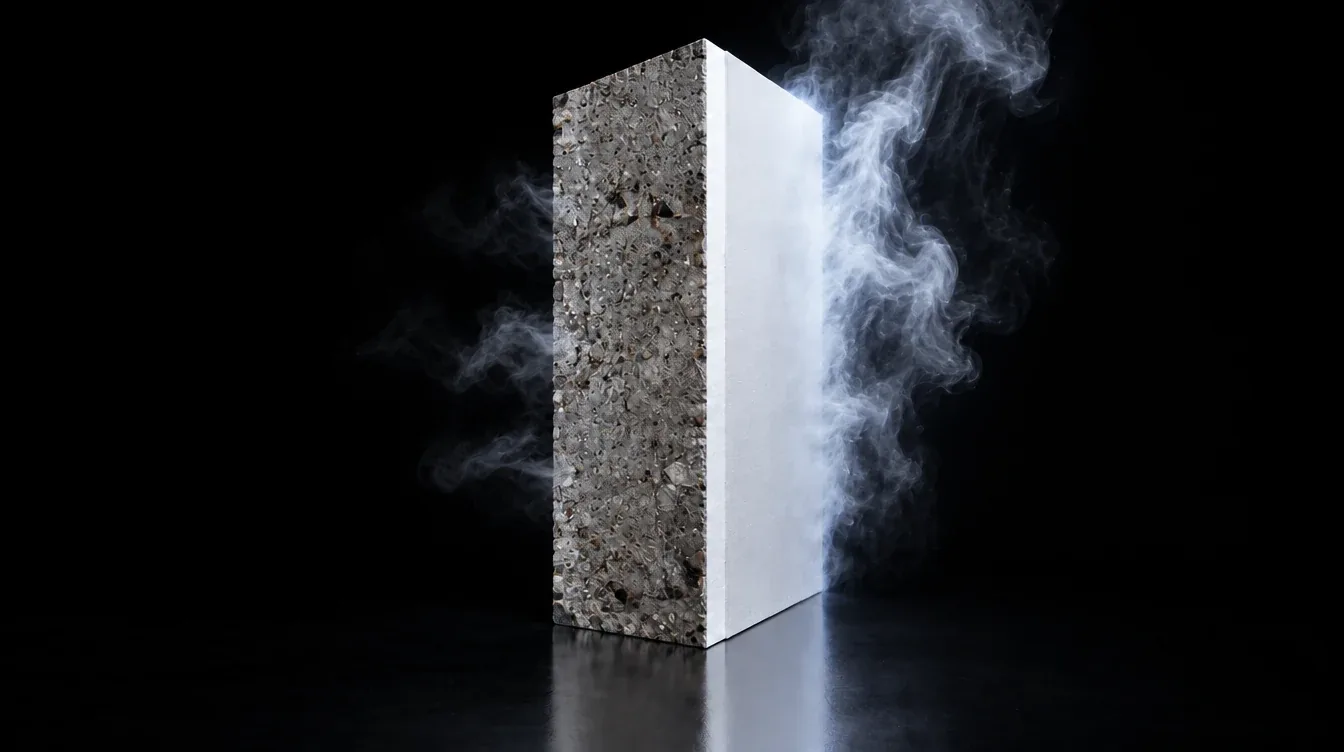
What “breathable” means
Class A fire performance.
Low smoke development in the coating’s reaction-to-fire test.
Classification published in technical data sheet v4.0 · April 2026.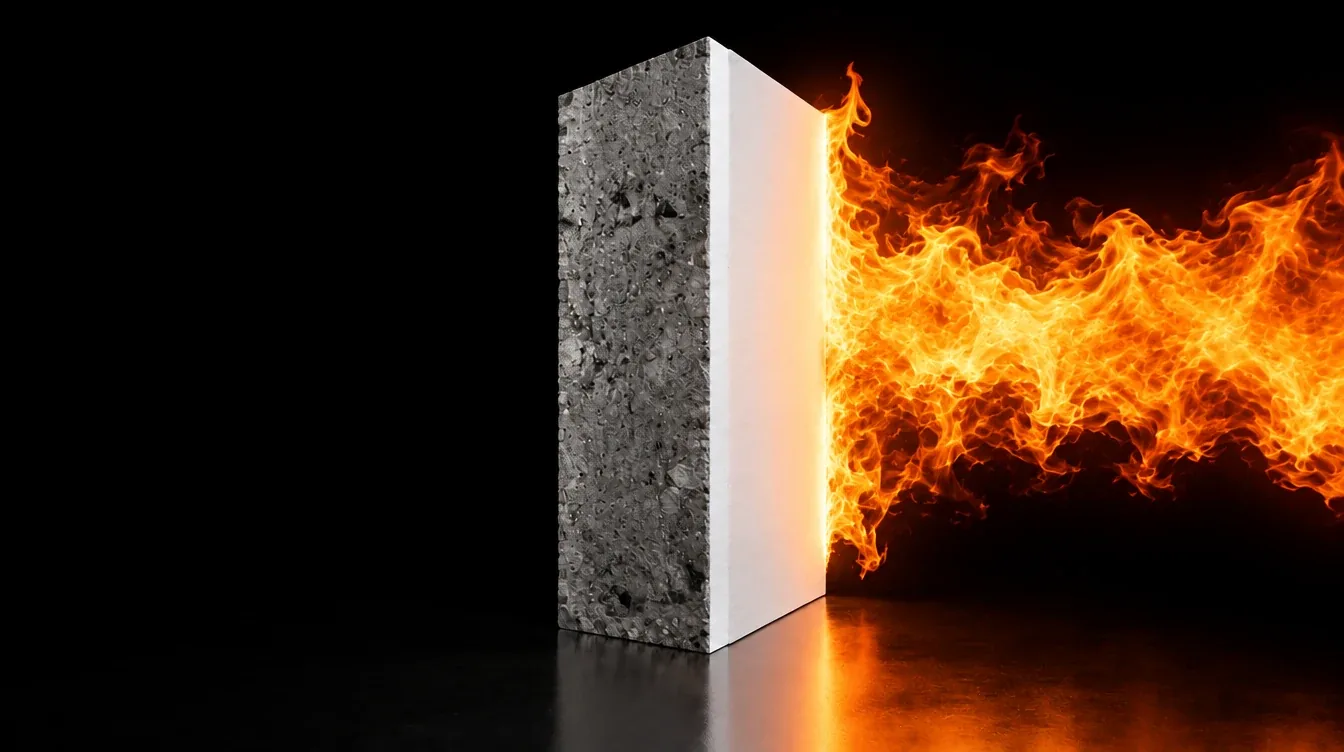
View test data
Technical data
Specifications and guidance to plan your UNHEAT® application.
The v4.0 data sheet specifies a functional thickness of 1 to 3 mm. Values are typical; performance depends on application and project conditions.
Before you apply.
01What does the dry finish look like?
UNHEAT cures white and matte. The data sheet declares it valid as a final interior finish with no additional layers; the result depends on substrate preparation and on the application.
02Is it applied like paint?
The data sheet authorises brush, roller or airless spray. Insulation, however, requires a uniform dry thickness: with a roller several coats may be needed. Follow the preparation and dilution instructions in the technical data sheet.
03How many degrees can it reduce?
Results depend on climate, surface, building system and applied thickness. These conditions must be assessed with the technical team to estimate performance for your project.
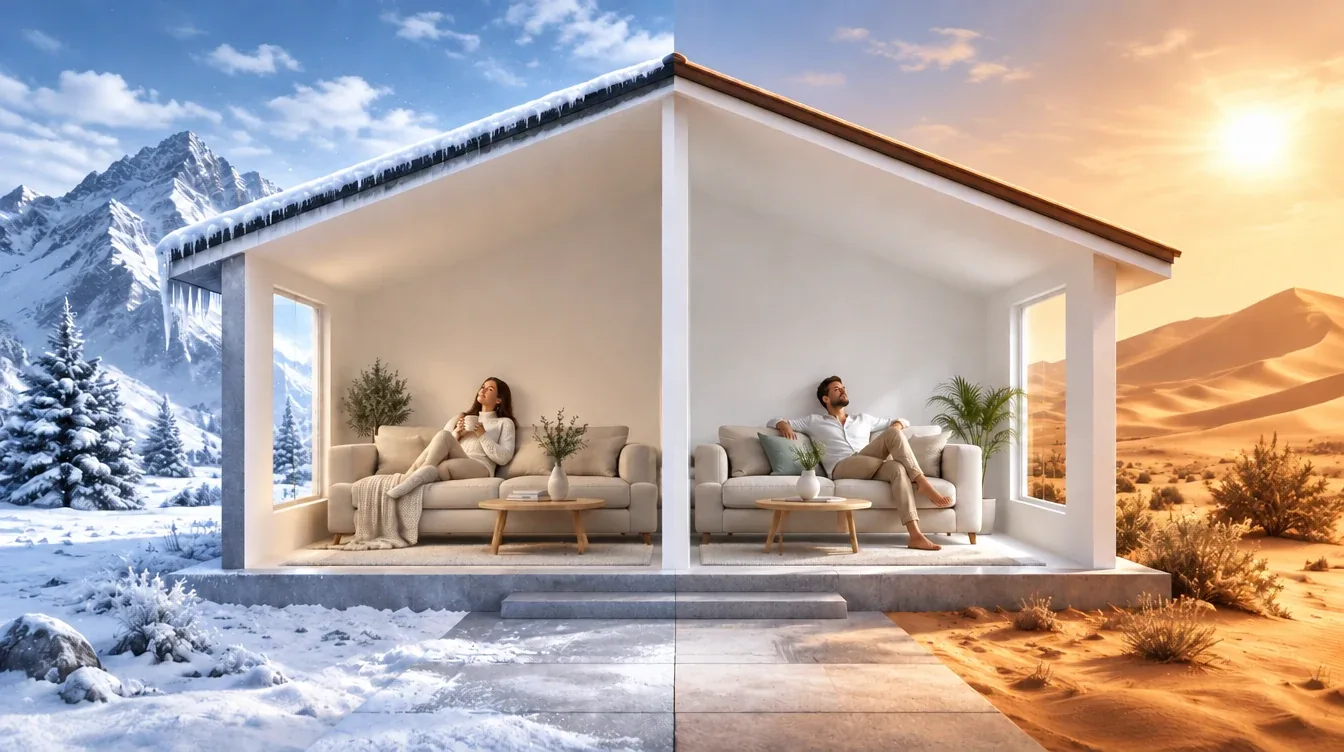
04Does it work in both hot and cold weather?
Yes. By helping reduce heat transfer, it can help limit heat entering in warm climates and heat escaping in cold climates.
Let’s define the
thickness for your
project.
Tell us where your project is and which wall you want to insulate. We’ll help you determine the thickness and application requirements.
View technical data sheet